Gold Margin Requirements Raised: What Happened and Why It Matters

Gold Margin Requirements Raised: What Happened and Why It Matters

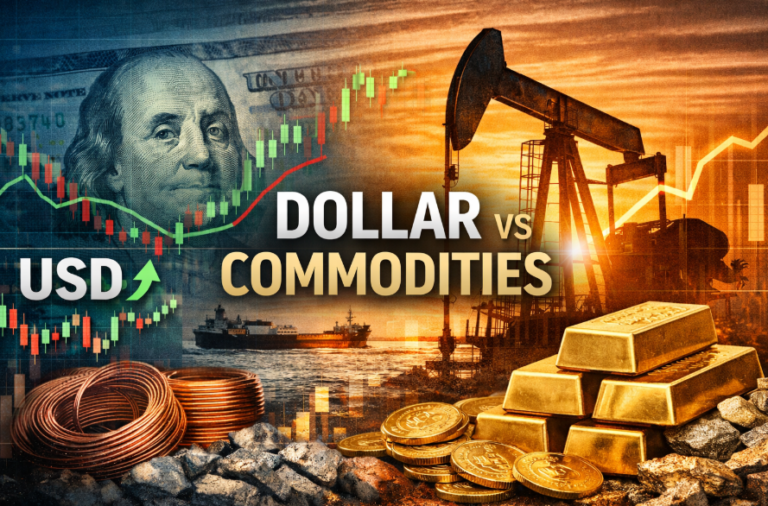
The CME Group, which operates the COMEX futures exchange where much of the world’s gold is traded, has raised margin requirements for gold futures contracts. Under the new rules, the initial margin for gold contracts under a non-heightened risk profile has been increased to 8 % of the contract’s value, up from 6 % previously. For positions under a heightened risk profile, margins have increased to 8.8 % from 6.6 %.

Rising Living Costs in Canada — And How U.S. Economic Policy Is Intensifying the Pressure

Rising Living Costs in Canada — And How U.S. Economic Policy Is Intensifying the Pressure

Canada is entering a period where households feel increasingly squeezed, even though headline inflation appears to be moderating. The combination of lingering core inflation, a fragile economic backdrop, and shifting U.S. policies is creating a complex environment where everyday costs continue to climb faster than incomes. Understanding this landscape requires examining both domestic factors and the powerful spillover effects from the United States — Canada’s largest trading partner and the most influential external force on its economic conditions.

How Trump’s 2025 Trade Policies Are Reshaping Global Supply Chains

How Trump’s 2025 Trade Policies Are Reshaping Global Supply Chains

The return of President Donald Trump in January 2025 has triggered a significant recalibration of global trade. The administration’s sweeping tariff program, termination of key bilateral agreements, and more assertive economic policy stance have begun to reshape supply chains across North America, Europe, and Asia.

Economic Impact of the 2025 U.S. Government Shutdown: Liquidity Shock, Market Volatility, and Business Fallout

Economic Impact of the 2025 U.S. Government Shutdown: Liquidity Shock, Market Volatility, and Business Fallout

The 41-day U.S. government shutdown in 2025 created major economic disruptions, including an $11B loss, a $0.95T Treasury liquidity surge, supply-chain delays, and financial market instability. Explore the full economic impact, risks, and market implications in this detailed analysis.

Will the Federal Reserve Cut Rates Again in 2026? Market Expectations, Inflation Trends, and Investor Outlook

Will the Federal Reserve Cut Rates Again in 2026? Market Expectations, Inflation Trends, and Investor Outlook

The Federal Reserve enters 2026 at a critical juncture for monetary policy. After two rate cuts in late 2025, markets are now focused on whether the central bank will continue easing or pause amid lingering inflation pressures. With the U.S. economy showing mixed signals—slowing growth, stabilizing inflation, and softening labor momentum—the direction of the Fed’s next move carries major implications for global markets, corporate earnings, and investor positioning.

Blockchain and Crypto Integration: The 2025 Regulatory Revolution

Blockchain and Crypto Integration: The 2025 Regulatory Revolution

The global blockchain and crypto landscape in 2025 is undergoing a historic transformation. Policymakers, regulators, and financial institutions are no longer treating digital assets as fringe instruments — instead, they’re integrating them into mainstream finance through structured regulation, institutional adoption, and cross-border innovation.

Geopolitical Tensions Triggering Volatility in Financial Markets (2025 Analysis)

Geopolitical Tensions Triggering Volatility in Financial Markets (2025 Analysis)

The year 2025 has seen geopolitical tensions emerge as a dominant driver of global financial market volatility, reshaping investment strategies and fueling inflationary pressures.
From the Ukraine conflict and Middle East hostilities to renewed U.S.–China trade frictions, investors are navigating one of the most unpredictable market environments of the decade.